
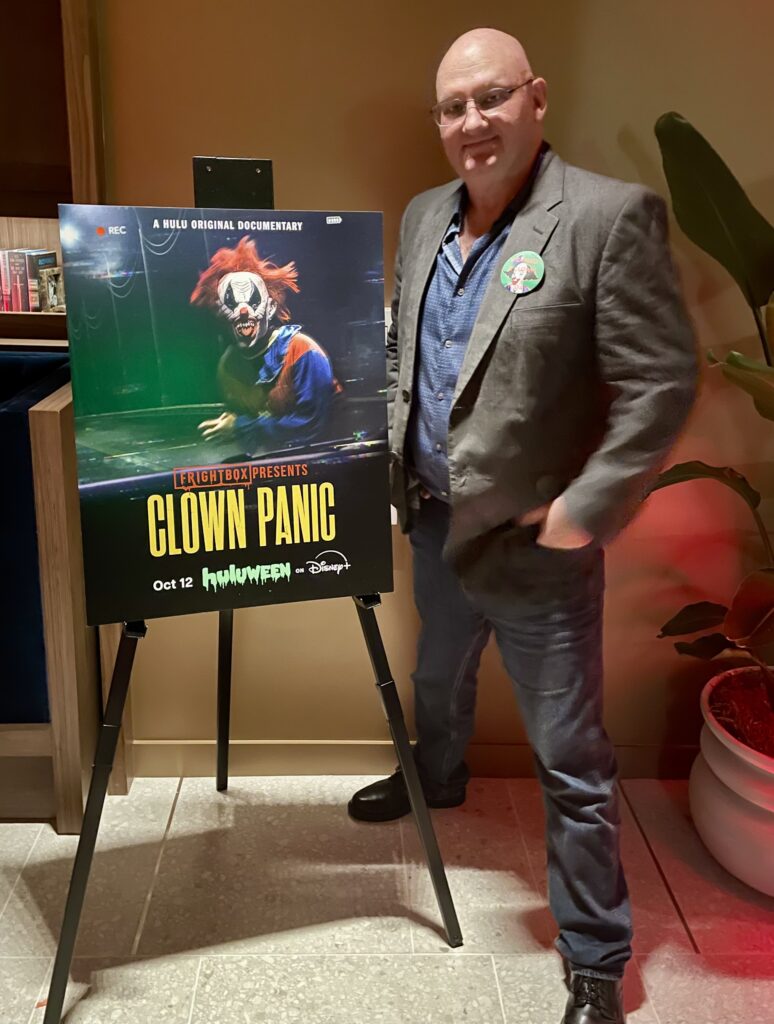
A few weeks ago I was invited to the premiere of the film Clown Panic, and found myself in Beverly Hills, surrounded by fashionable folks filing into a Christie’s auction house across the street, featuring some trending artist.
As I made my way into a hallway leading to the Charlie Chaplin Theater, I saw two young women at the door. When I saw their big red foam clown noses I knew I was in the right place. My name appeared on the guest list, and I was greeted just inside the door by a clown juggling colorful clubs. Neither one of us knew it at the time, but our fates—Gilly the Clown’s and mine—would forever be linked.
Almost immediately, I was accosted by a genial man in a suit who came up to me with an extended hand and a wide smile. I had no idea who he was, but he clearly recognized me. He introduced himself as Jonathan Chinn, a co-founder of Lightbox Entertainment, who had produced the film. He thanked me for being part of the film, and said my contribution was essential to making it all come together. I don’t spend a lot of time in Hollywood, and I took it with a grain of salt, in a town where feigned compliments are second nature. Nevertheless, he seemed genuine and glad to see me, especially when he recalled that I’d flown in from New Mexico to attend. He gestured widely down the hall toward the theater entrance and heartily suggested I take advantage of the open bar for the next hour until the film began. I nodded and followed his sage advice.
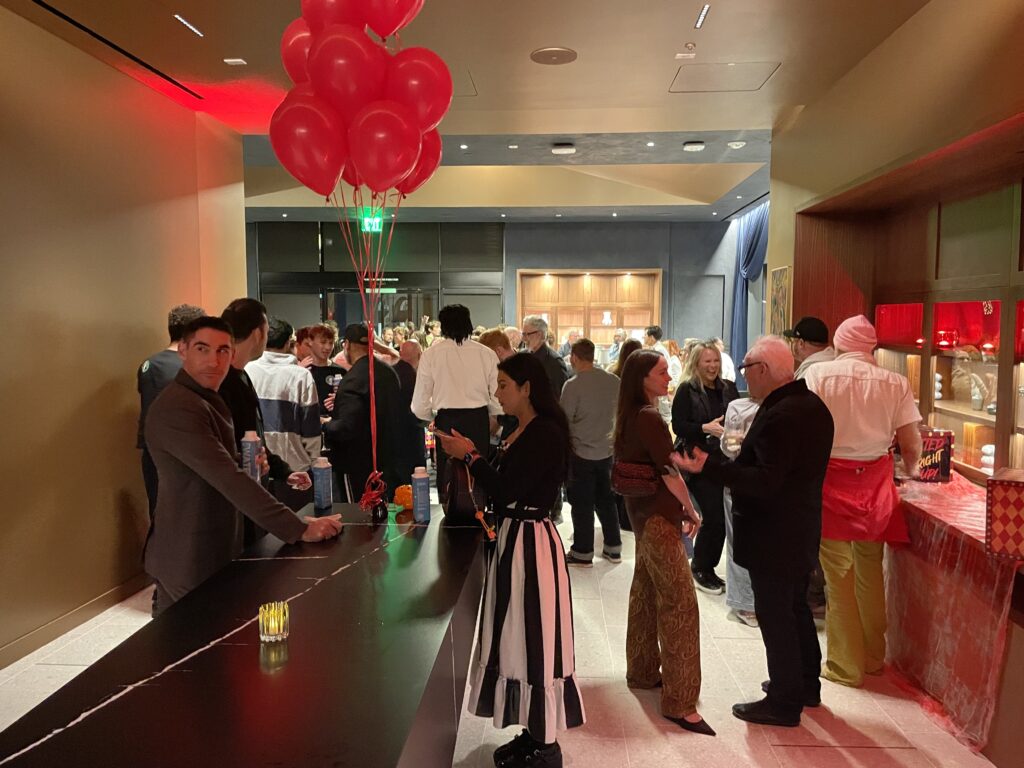
The place was decorated in clown motifs, balloons, and the like. I didn’t see Billy Crystal dressed in white greasepaint urging on the other servers with a “mime is money!” pep talk. But I did see a few people I thought I recognized in the growing crowd. One of them was iconic Hollywood mogul David Geffen, who I was pretty sure was not in fact there, the other was iconic Hollywood actor Malcolm McDowell—who I was pretty sure was also not in fact there. There would be no reason either of them would be at a small-but-respectable premiere screening of a Hulu film about the mass hysteria around clown sightings in 2016. Lots of people look like lots of other people, so my attention turned to the libations.
As I sipped an IPA and munched on a braised-wagyu-and-smoked-apricot-with-a-hint-of-Malaysian-mint hors d’oeuvre, I reflected on the strange journey that brought me there….
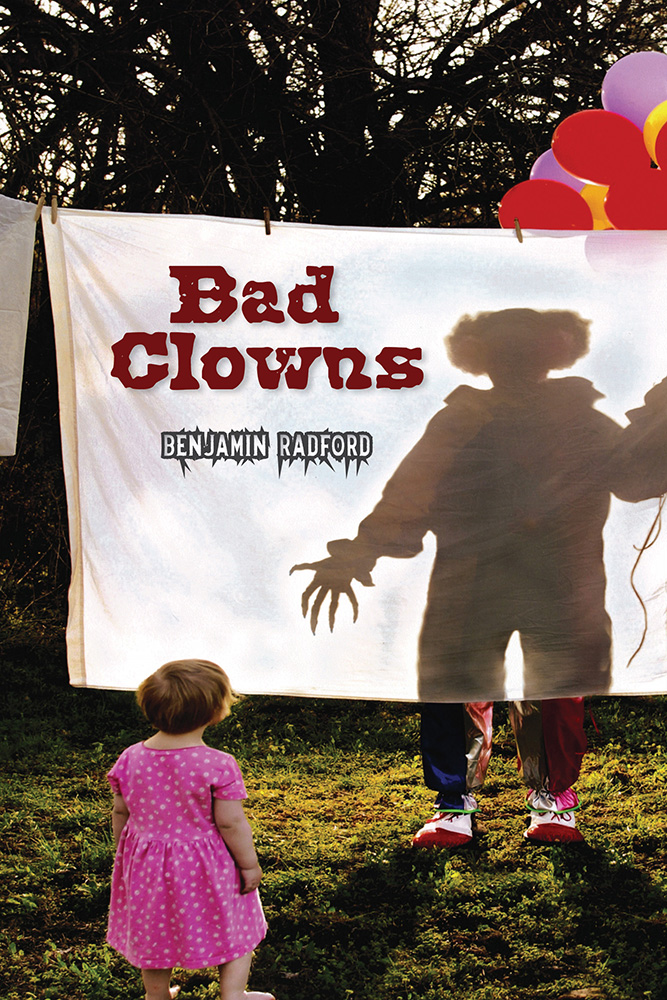
The process began, as all TV and film projects do, with a query from a producer or production assistant (PA). She reached out saying they were filming a doc on the 2016 clown panic, and had seen—but of course not read—my UNM Press book Bad Clowns. What could I tell her about the crazy clown panic that spread across the country (and indeed around the world) in the months leading up to Halloween 2016? I smiled and asked how much time she had.
Though that particular clown panic happened some six months after my book came out, the book does a deep dive into evil, scary, and otherwise maladjusted clowns in literature, folklore, pop culture, and real life. It covers the Joker, Pennywise, Harlequin, and many others, from ancient times through today. She seemed shocked to learn that there was actually a history of clown panics dating back to the 1980s. We set a follow-up video call for the next week, and that launched a three-year journey from script to screen.
Round 1: London, England
June 2023
I was interviewed at Lightbox Studios in London, where I happened to be returning from a folklore conference in Sheffield. Along the brick wall were posters of some of their films—many of which I’d seen, and most of which were excellent: Man on Wire, Tell Me Who I Am, Searching for Sugar Man, Lost in the Jungle, The Mission, and so on. Yeah, this was going to be a quality project; I was in. I was on camera for about four hours, discussing Bad Clowns and the clown panic. I then headed to London museums and then home, and didn’t hear anything more for about a year.
Then an email popped up saying that an unnamed streaming channel (spoiler: Hulu) was interested in distributing it, and the project had been greenlit. They loved my interviews, but there was a new director attached to the project, Ed Perkins, and he’d be doing the filming. I met Ed over a Zoom call one day, chatting from a bench in Hyde Park. We had a great discussion, and it was clear he wanted to go beyond the sensational viral videos to look at the underlying social and cultural context of the panic. He was doing what directors and producers, in my experience, rarely do: He was listening. He wanted to really understand the topic, take a deep dive into the nuances lost amid the wild headlines. Yes, it was superficially about the clown panic, but the story is really about people, fear, and social media contagion. He didn’t already have a script that he wanted to shoehorn my research into, whether it fit or not. A Los Angeles shoot was soon arranged.
Round 2: Burbank, California
October 2024
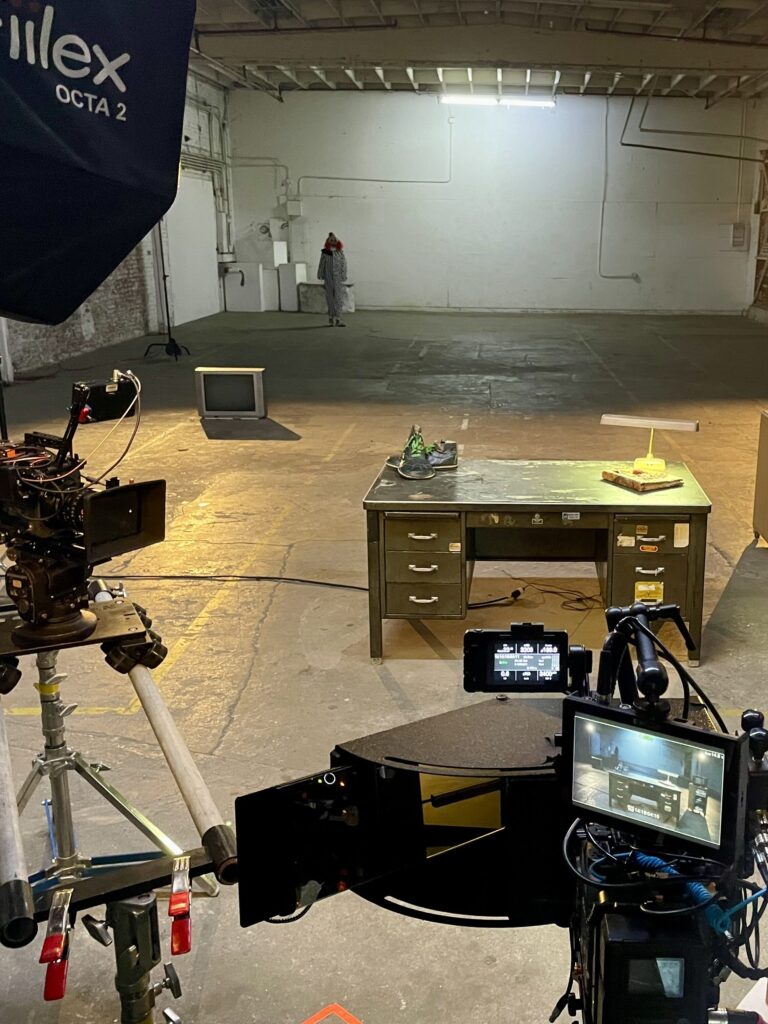
I flew to L.A. and my Uber dropped me off at a nondescript address in an industrial area just ahead of my call time. This wasn’t the Warner Brothers back lot (then again it didn’t need to be). Making my way through a garage and lobby area I found a fairly elaborate set for the shoot.
Anyone who thinks being on film or television is fun hasn’t spent 8 to 10 hours a day on camera, under the hot lights, pausing for passing airplanes and motorcycles, trying to keep your answers concise, clear, accurate, and entertaining. Oh, and smile and keep up the energy! The shoot went great and the crew were professional and fun to hang out with.
Another year would go by before I would hear anything more about the project. This isn’t unusual; feature films—and documentaries in particular—can take years (or even decades) to be made. There are so many moving parts that, frankly, it’s a minor miracle that anything of quality makes it to the screen.
I was pleased to hear back from Ed, but also a bit puzzled. I gamely replied, “Hey, great to hear from you. I’m glad the project is coming along, but I’m not sure what else you want to ask me about. Like, we already filmed for about 16 hours over three days; I’ve told you everything I know about the clown panic! I’d love to see you and don’t mind going on camera again, but at this point I’d just be repeating myself.” They assured me that they just needed a few pick-up shots, additional B-roll, and tighter lines, now that the narrative was more focused. I said that was fine, and soon they visited me in Albuquerque.
Round 3: Rio Rancho, New Mexico
February 2026
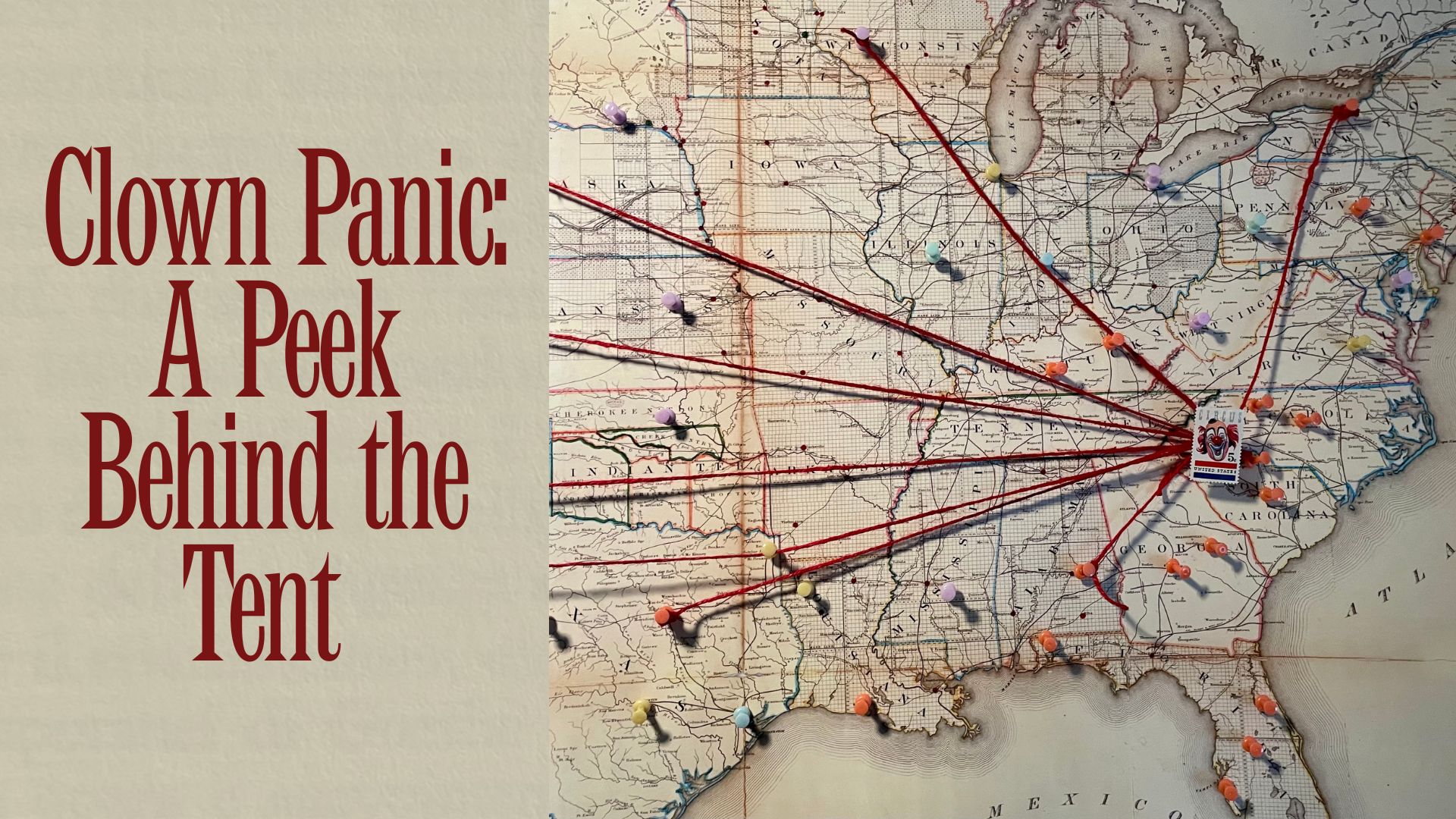
I met Ed, his teammate Milo Riley-Smith, and the small crew at my house. We shot some scenes, including in my office of me researching clown reports and plotting out scary clown sightings on a map with push pins. In one scene they wanted to depict me jumping into action to research the clown panic. Ed and Milo were impressed by the Sandia Mountains that abut Albuquerque and recognized the cinematographic potential of such an impressive backdrop. When we filmed this, on the edge of the desert in Rio Rancho, not far from my house, Ed got quite excited about the tumbleweeds lining the dirt road. They marveled at this botanical novelty, much to my amusement.
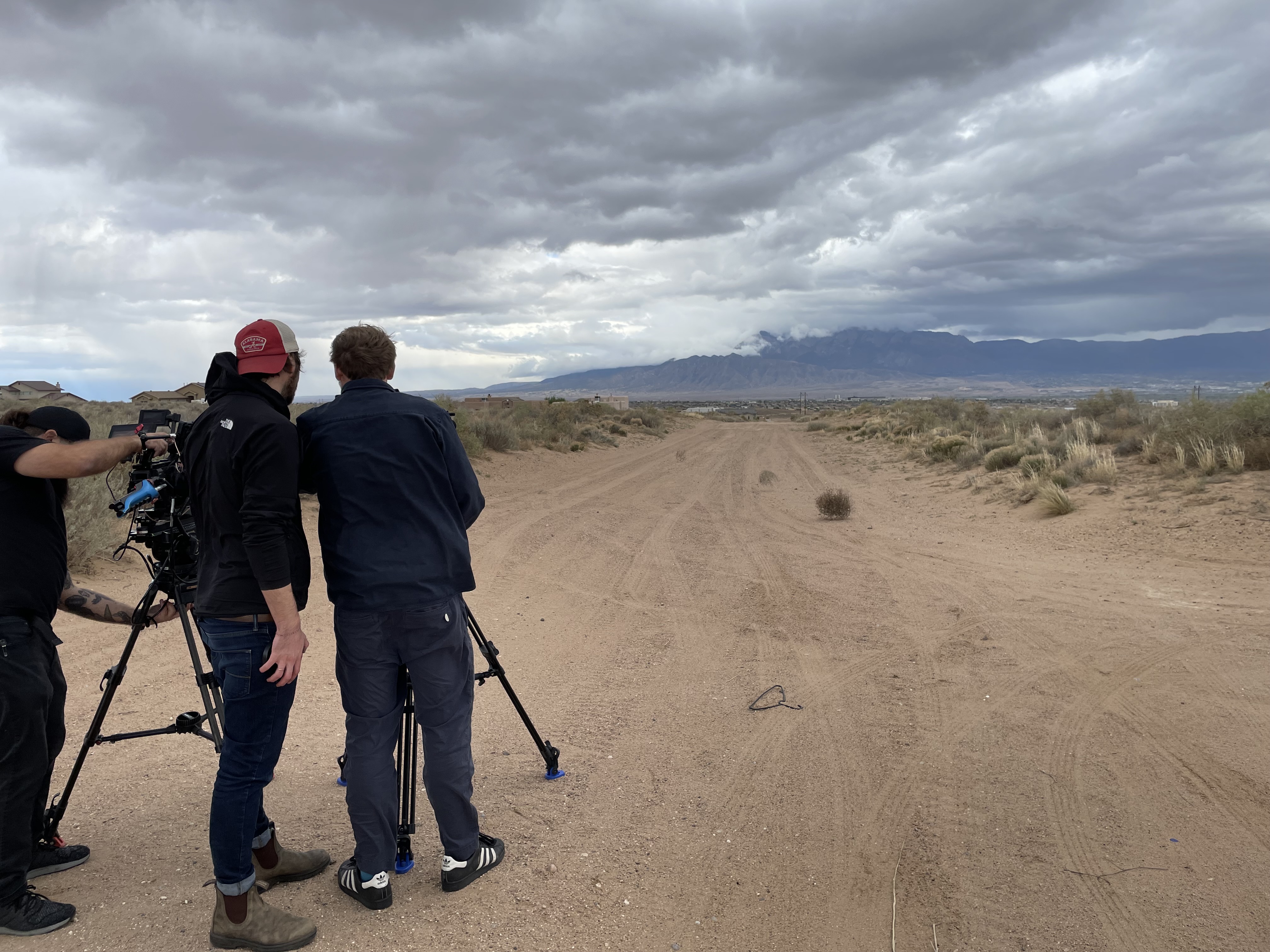
He explained that they’d seen them in Western films, and Breaking Bad (and of course Wile E. Coyote cartoons), but never actually seen one up close. London, he said, had no tumbleweeds. They are as common as the dirt they grow in out here in New Mexico, but they were just fascinated by them. I gestured widely and said there were hundreds of thousands of them around us, they were welcome to take as many as they’d like… They filmed me in my car heading down a road, and the guys waited as I zoomed past the camera into frame, then tossed them behind my car for a little added visual interest.
The Premiere
October 2026
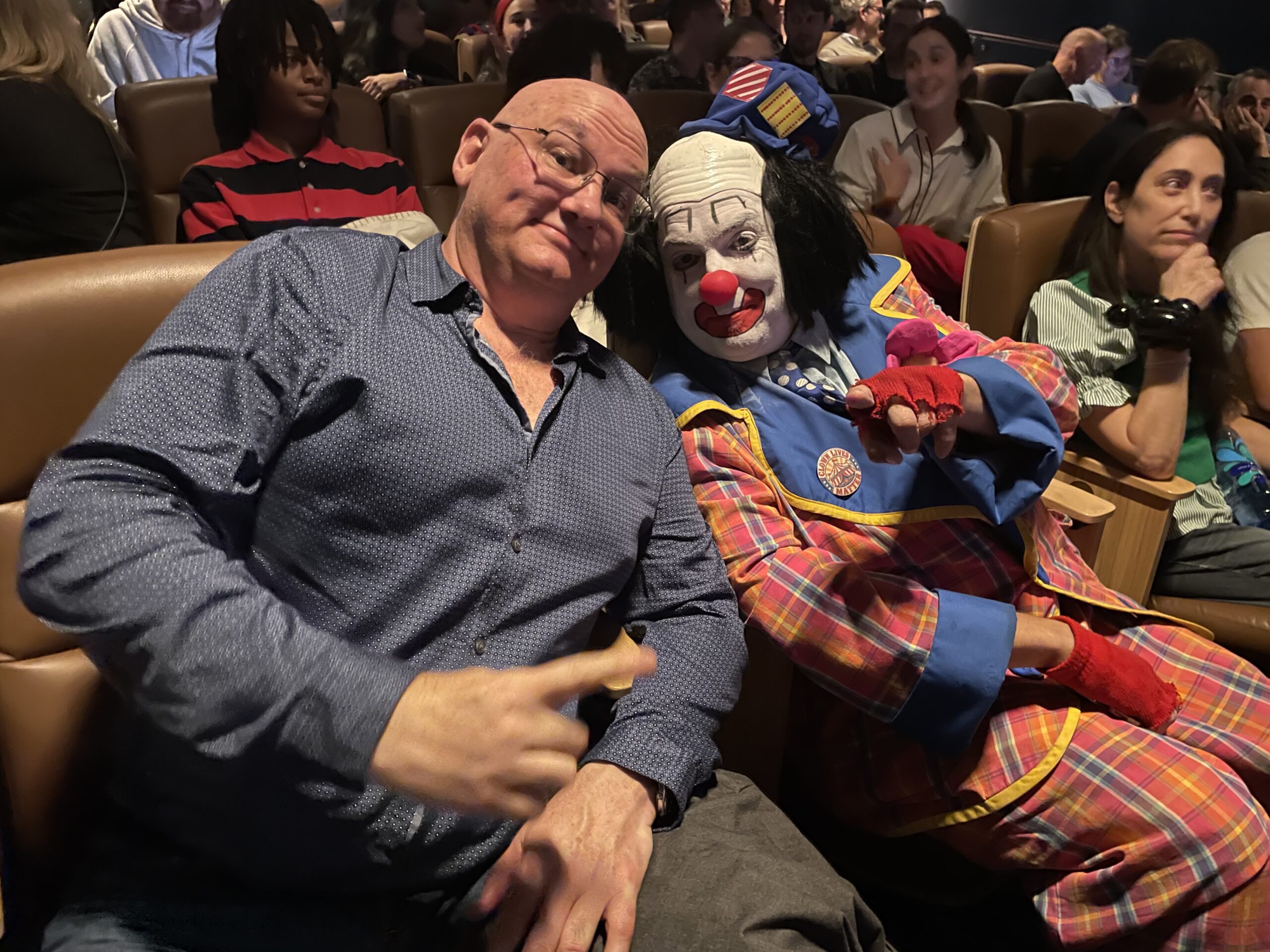
After another beer and round of multi-hyphenate hors d’oeuvres, it was showtime! We filed into the theater, and the man who first greeted me led the clown and I to a couple of reserved seats in the middle. That was a gracious touch, and Gilly the Clown and I finally got a chance to chat. We realized that we were both in the film, and were curious about each other’s roles. As we chatted a bit I turned to my right and saw Ed, the director, chatting with surely-not-Malcolm McDowell.
I asked Gilly, “that’s not Malcolm McDowell, is it?” and his greasepaint face gave a serious nod.
“It one hundred percent is,” he said, in a tone that made it clear he was not clowning around.
“What the hell is he doing here? Is he also in the film?” He shrugged, and before he could reply, the producer was introducing McDowell, who was introducing Clown Panic. It was all very fun and a bit surreal. (Though the man I’d thought was “David Geffen” was, indeed, a doppelganger.)
On Clown Panic I was just the on-camera talent/expert; I didn’t write, produce or direct any part of it. Nevertheless I think it’s fair to say (and the director and producers explicitly told me) that the film couldn’t have been made without my research and participation. The structure of the film is based on my research, and both Gilly the Clown and I sort of serve as anchors for the audience, grounding the narrative as needed and offering some sober—and sometimes silly—context.
Having been on both sides of the camera on TV and film projects for many years, I know just how much work and preparation goes into these shoots, and I was genuinely impressed by Ed and Milo who intuitively understood that the clown panic phenomenon was much more nuanced and interesting than most people realized, and that a superficial treatment would not do it justice. It is the definitive account of the 2016 clown panic—and it also manages to be funny and scary at the same time.
As improbable as it sounds, this was not my first, or even second, foray into the world of bad clown documentaries. I appeared in the 2019 documentary film Wrinkles the Clown, directed by Michael Beach Nichols (who also did Welcome to Leith and Perfect Wife: The Mysterious Disappearance of Sherri Papini, among other film and TV credits); it’s currently available on Netflix and other streaming services. And earlier this year I released my own documentary short film, State of Nebraska V. Crotchy the Clown, which won the Grand Prize for the Best Animated Short at the Indie Vegas Film Festival, and Best Documentary Short at the Atlanta Documentary Film Festival. It’s still in festivals and is an official selection for the St. Louis International Film Festival next month.
I was pleasantly surprised at some of the plot twists of this documentary, and I learned a few things I hadn’t known about the clown panic. I’d written in passing about a few of the people involved in the case in some way, but it was fascinating hearing the stories and experiences in their own words.
Also, the tumbleweeds chasing my car in the final cut was perfect, and elevated that shot, just as their script elevated my clown panic research and brought it to life. I’m proud of the film, and it reflects a good compromise between academic research and pop culture documentary adaptation, available footage and practical run time, scary clown nerd experts and scary clowns.
Clown Panic is now streaming on Hulu; you should watch it. And, of course, pick up Bad Clowns from UNM Press—before the clowns return. And they will.
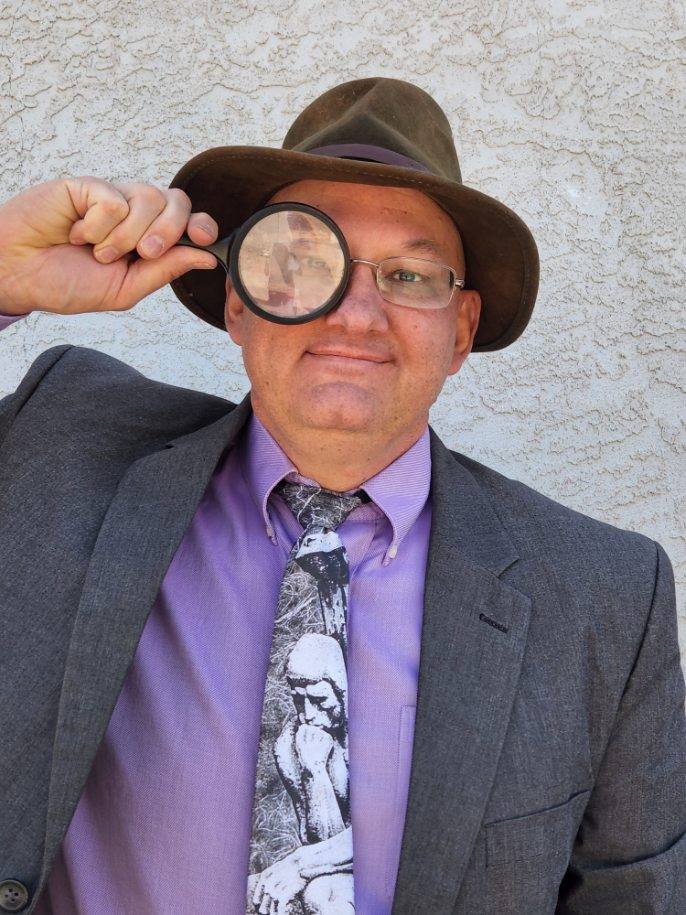
Benjamin Radford is an award-winning author of over a dozen books including Mysterious New Mexico: Miracles, Magic, and Monsters in the Land of Enchantment and Tracking the Chupacabra: The Vampire Beast in Fact, Fiction, and Folklore (both from UNM Press) as well as Investigating Ghosts: The Scientific Search for Spirits. He is a folklorist, filmmaker, and a longtime editor of Skeptical Inquirer science magazine. He lives in Corrales, New Mexico.