Author-targeting scams are as old as publishing itself, but recently we have seen an increase in AI-generated or -assisted scam emails, in particular. These take many forms, but the two main types we have seen purport to be from book clubs or SEO/discoverability services.
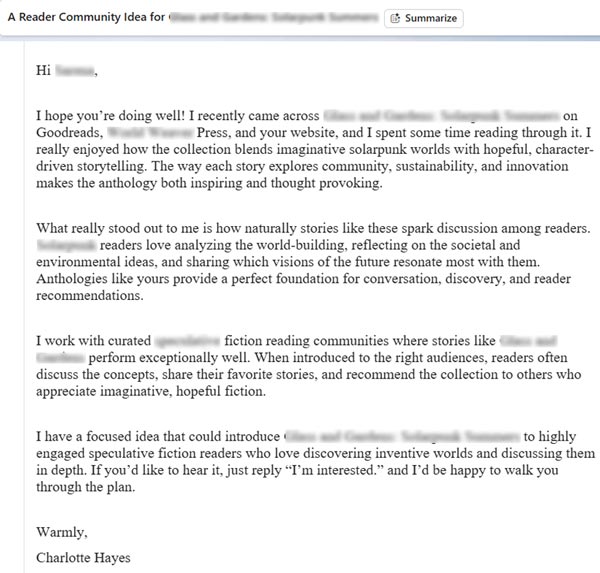
Book Club and Book Review Scams
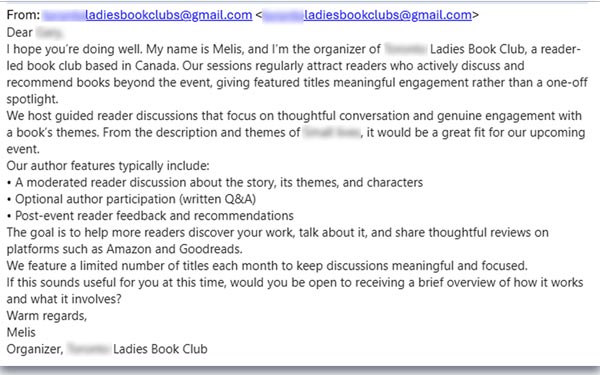
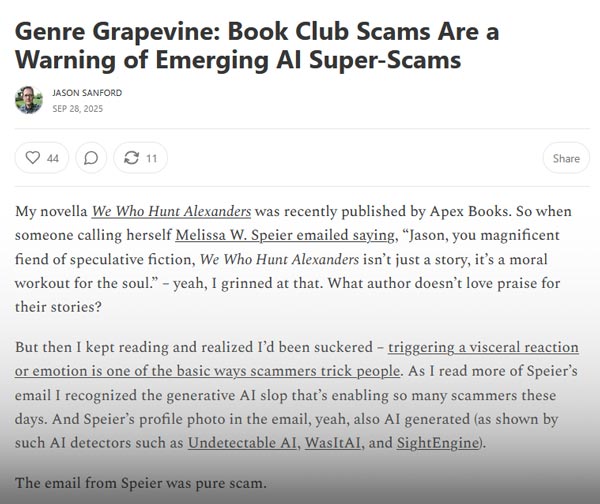
Book club and review scams have been around for many years, but the rise of AI chatbots has enabled more sophisticated scams than ever before. These generally offer to connect you, the author, with a large book club interested in adopting your book. If you engage with the initial offer, you may be given (or asked to pay for) access to a chat forum ostensibly belonging to the book club. In the chat forum, there could be dozens of “people” discussing books and answering questions, giving the impression of a large and lively community of readers; unfortunately these accounts are all fake, AI-powered personae. The next step of the scam is collecting a fee of hundreds or even thousands of dollars from you to ensure adoption by the “book club,” which of course will never materialize.
A variant on this theme is offering to secure book review coverage or other publicity promos in high-profile (or entirely fictitious) outlets. Victoria Strauss, founder of the Writers Beware watchdog site, wrote about these scams in September of 2025:
For a specific and illustrative example, read Jason Sanford’s article about his experience with such a scam:
SEO/Discoverability Scams
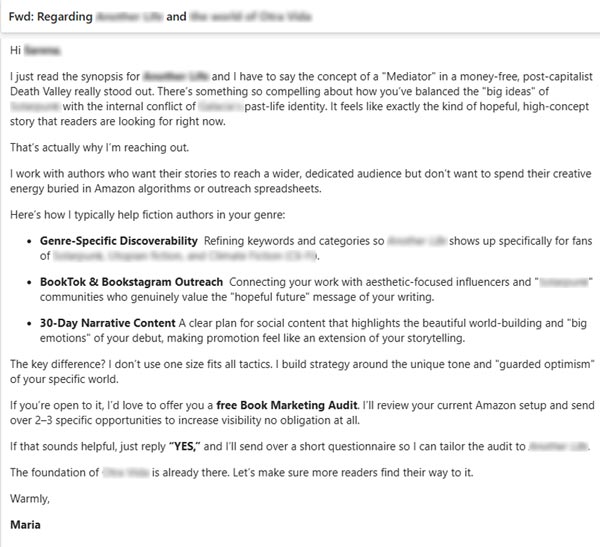
Another genre of scam we have seen in our inboxes recently uses AI to provide an analysis of a book’s reach and performance on Amazon or other online retailers, then offers to optimize the metadata (keyword phrases, subject codes, etc.) of that book to increase visibility and sales—for a nominal fee. They may even claim that your book is in danger of being delisted by Amazon for violating some policy or failing to meet a certain metric.
The downfall of this scam, though, is that no one but your publisher and distributor (University of New Mexico Press and Simon & Schuster, respectively) actually has access to edit or “optimize” your book’s metadata. There may well be a discussion to be had around keyword phrases and subject codes, but an unsolicited “expert” isn’t the one to have that conversation with. If there is a problem with your book’s listing on Amazon or another retailer, we would work with them directly to solve it.
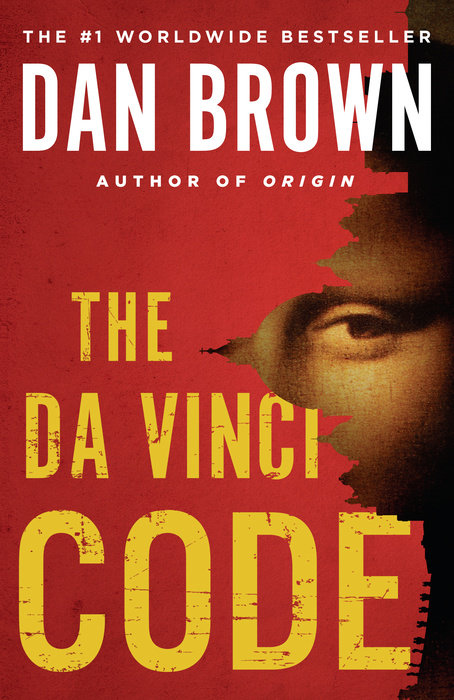
Dan Brown (yes, that one) even received this type of email solicitation for The Da Vinci Code:
“Hey Dan Brown,
I just came across The Davinci Code, and I’ve got to say it’s rare to see a story that balances heart, message, and craft the way yours does. It’s the kind of book readers don’t just read: they feel it. That’s special.
But here’s the thing: too many incredible books like yours disappear in the noise. Not because they aren’t brilliant, but because they haven’t yet found the right stage. And that hurts seeing a story you poured your soul into not getting the visibility it deserves.”
Let Us Know
If you receive such an email (or letter, or phone call), regardless of whether it immediately seems suspicious, remember that, as your publisher, we are here to handle opportunities like book club adoption, bulk orders, publicity and promotions, and metadata optimization. In most cases these responsibilities can only be executed by the Press, whether de facto or contractually.
If you have questions about an email you’ve received about your book, or about author scams in general, please contact your editor or reach out to us at [email protected].
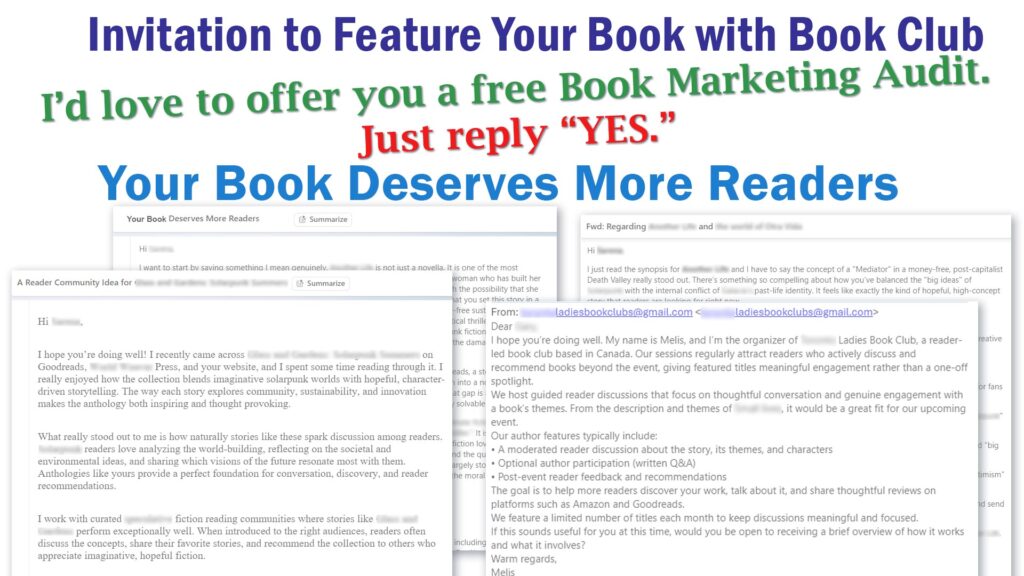
Sample Scam Email Messages: